
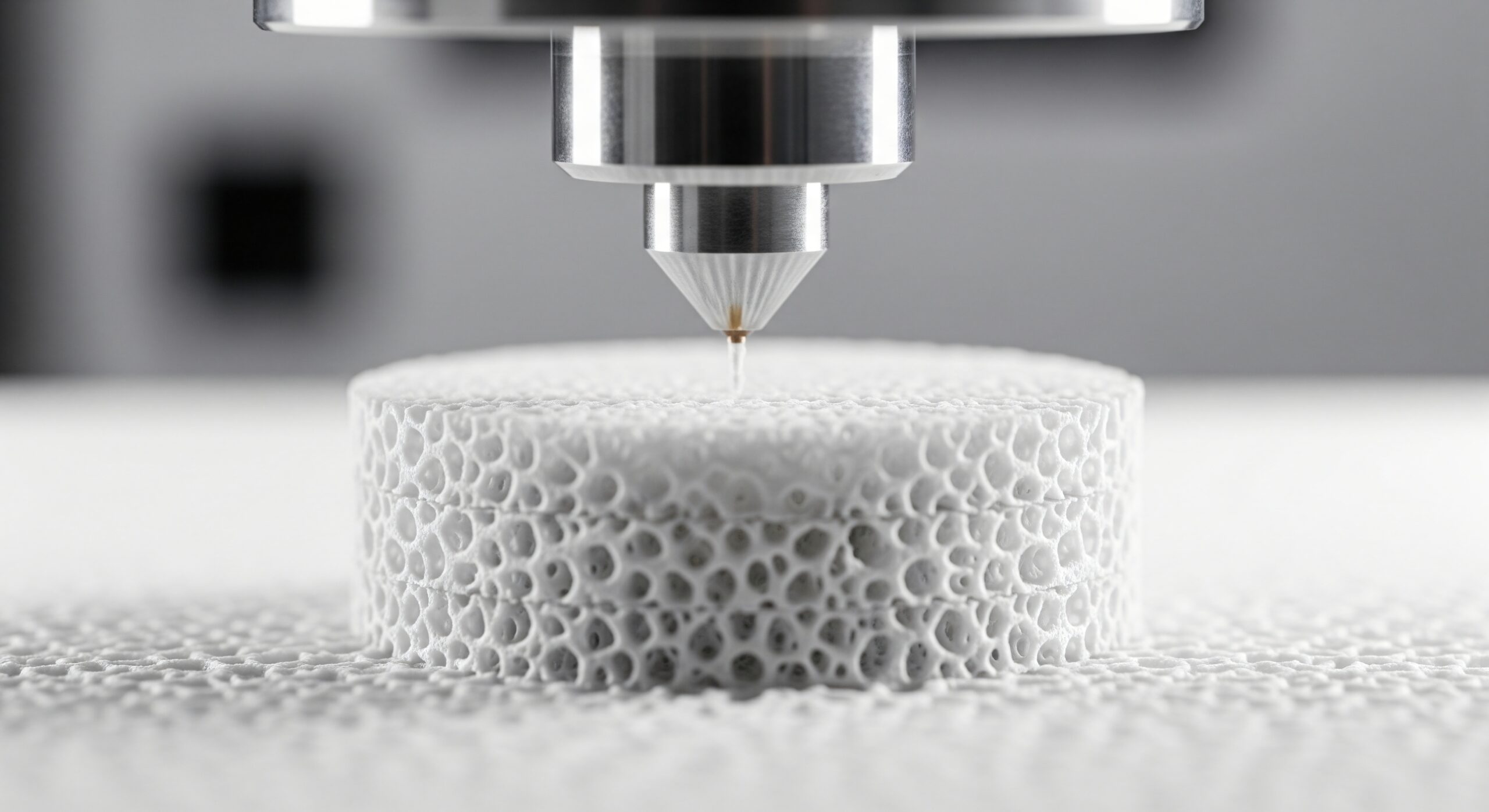
The National Institute of Standards and Technology (NIST) uses the familiar challenge of getting ketchup out of a bottle to explain how “non-Newtonian” fluids behave—and why that same science could unlock better ceramic 3D printing. In a recent Taking Measure blog post, NIST researcher Will Spencer describes how materials like ketchup or ceramic suspensions change viscosity under different forces, sometimes flowing freely and sometimes acting almost solid. By carefully characterizing and modeling these behaviors, NIST and its partners hope to design printable ceramic materials that can hold complex shapes during printing and then be fired into strong, heat-resistant parts for applications ranging from aerospace to electronics.
The article highlights how advances in rheology—the study of how materials flow—help engineers tune ceramic “inks” so they move smoothly through a nozzle but remain stable once deposited, much like well-designed ketchup that pours when you want it to and stays put on your food. That understanding is essential for scaling up ceramic additive manufacturing, where parts must survive high-temperature processing without warping or collapsing. For manufacturers and researchers, NIST’s work shows how everyday experiences can inspire measurement science that leads to new production methods and high-performance components built from advanced ceramics.
Read more here.