

Reduce Risk and Secure Your Government Contracts
If you’re in the Department of Defense (DoD) supply chain, you may be subject to Defense Acquisition Regulations System (DFARS) / NIST SP 800-171 requirements. DFARS compliance is required of any companies that, “Process, store or transmit Controlled Unclassified Information.” Failure to comply can cause the termination of your DoD contracts.
Polaris MEP can help you determine whether you need to comply with DFARS requirements and how best to achieve compliance. This includes completion of your Security Assessment as well as creation and implementation of your System Security Plan and Plan of Action.
According to the U.S. Department of Homeland Security, the manufacturing industry is the second most targeted industry based on the number of reported cyber attacks.
Pat Toth
Cybersecurity Program Manager, NIST MEP
Your Biggest Challenges Solved
Grow Sales
Market Competitiveness
Standards Compliance
How We Help
SELF-ASSESSMENT
Self-assessment of your systems’ security against the NIST SP 800-171 controls can be time consuming and challenging. We can facilitate your process, making everything simple and straightforward.
PLAN DEVELOPMENT
Polaris MEP’s DFARS specialists can make the development of your key documentation (System Security Plan and Plan of Action) painless and efficient.
POLICY DEVELOPMENT
Our policy templates can help provide you with a starting point for addressing the requirements of NIST SP 800-171 — AND can be customized to your systems and needs.
EMPLOYEE TRAINING
Once policies have been established, we provide cybersecurity awareness training for your employees.
Compliance Doesn’t Have to Be Hard
- Efficient and accurate self-assessments
- Comprehensive and protective System Security Plans
- Clear Plans of Action that close the compliance gap
Related

R.I.’s manufacturing sector braces for owner exits
Rhode Island’s manufacturing sector is facing a pivotal moment—one that will shape the future of the industry for decades to come. A recent Providence Business News article highlights a pressing reality: nearly 80% of the state’s manufacturers are approaching...

Why Modern Supply Chains Can’t Rely on Efficiency Alone
Materials Handling & Logistics’ article “Resilient by Design: Why Modern Supply Chains Can’t Rely on Efficiency Alone,” by George Ninikas, argues that cost-optimized networks on paper often break down when real-world conditions change. Ninikas, senior vice...

Collaboration in Action: Highlights from North Kingstown’s Manufacturers’ Forum
Collaboration in Action: Highlights from North Kingstown's Manufacturers' Forum Manufacturers from across North Kingstown gathered on May 13, 2026, for a dynamic and solutions-focused conversation at the North Kingstown’s Manufacturers’ Forum, hosted by Polaris MEP in...
Cybersecurity breaches aren’t just for large businesses. No business is too small to be hacked. Over 70% of reported breaches actually affected businesses with 100 employees or less. You might be surprised to learn that represents over 90% of Rhode Island manufacturers!
Christian Cowan
URI Research Foundation
Category: Cybersecurity

Polaris Announces Rebrand to Strengthen Support for Rhode Island Manufacturers and Tech Companies
Polaris is a nonprofit dedicated to driving business growth, innovation, and job creation in Rhode Island. It is a new organization created to unify its services under a single, accessible name that signifies its role as a trusted advisor and community partner.

Disaster Preparedness: How Measurement Science Can Help Your Community
Disasters are low-probability but high-cost events, and that better measurement science — from valuing co-benefits to quantifying risk preferences — can make tough preparedness decisions more data-driven and easier for officials and residents to understand.

What Must Change for Artificial Intelligence to Pay Off?
AI success is now an operating-model issue, not a technology issue, and calls for leaders to start with the work itself: mapping where rules versus judgment are needed, identifying high-impact failure points and treating AI as a teammate to onboard, not software to install.

How Standards and Testing Will Help Keep Self-Driving Vehicles Moving Safely on the Road
All aspects of human driving — instinctive decisions, driver collaborations and interacting with road infrastructure — must be replicated for automated driving. Many experts believe humans still have an edge over today’s technologies, but technology is rapidly improving. Industry, government and other partners are working toward replicating these aspects of human driving for automated vehicles (AVs) and building a supporting infrastructure.

NIST Engineers Design 5 New Ways to Connect Concrete Pieces for More Resilient Buildings
NIST engineers have introduced five new ways to connect precast concrete components that significantly enhance building resilience.

How Do Recycling Facilities Sort Different Kinds of Plastic?
When scientists need even more details about the composition of a plastic, they can use lab techniques that involve dissolving the plastic in a solvent, sometimes while heating. After dissolving a sample, the scientist might examine it using a technique called size exclusion chromatography, which takes advantage of the fact that smaller molecules move more slowly than bigger ones through a column or tube packed with porous beads.
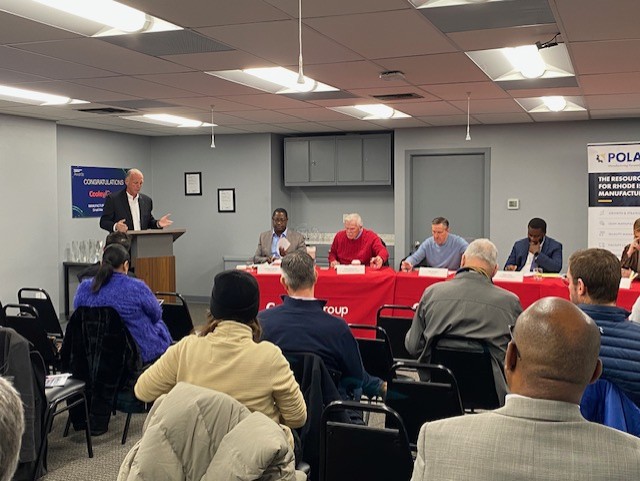
Pawtucket Manufacturer’s Forum Provides Lively Conversation and Insights
On Tuesday, December 9, 2025, various manufacturers gathered at the Cooley Group’s Pawtucket headquarters for a stimulating conversation on the current state of Rhode Island manufacturing.

How Can Companies Improve Sustainability Efforts?
In a feature for Material Handling & Logistics, Indrani de Silva of Sphera explains that although many companies now publish ESG commitments, a surprising number still lack the systems and supplier engagement needed to deliver meaningful improvements.
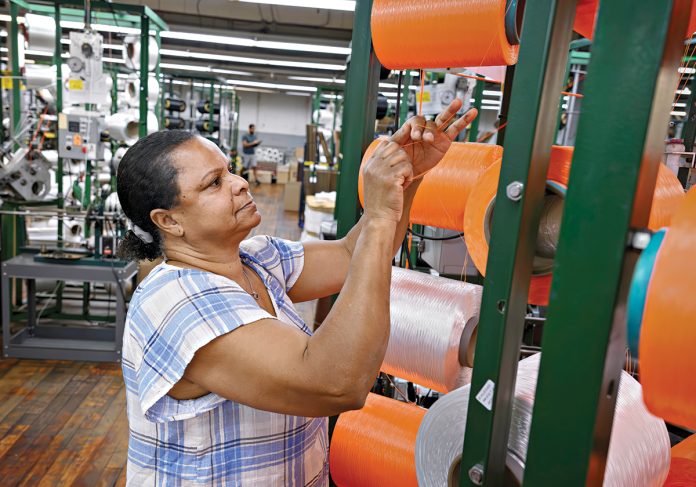
The Toll of Tariffs
Rhode Island’s manufacturing sector remains a major contributor to the state’s economy. And many of those companies are under tremendous stress, according to a survey conducted in June by R.I. Commerce Corp., the Rhode Island Manufacturers Association and Polaris MEP.

AI in Manufacturing: What’s Now—and What’s Next?
IndustryWeek’s coverage by MIT Professor Wojciech Matusik spotlights artificial intelligence as a transformative force in manufacturing, pushing adoption beyond experimentation to everyday business impact.